 Rev. Prof. Ebenezer Yaw Blasu
Creation-Care Systems for Christian Universities and Churches Worldwide
African-rooted theocology and institutional design for Christian universities, seminaries, denominations, and faith-based NGOs in Africa, North America, and beyond.

The Global Church Believes in Creation Care—but Lacks Integrated Systems
From galamsey-scarred rivers in Ghana to pipeline disputes and mining-justice campaigns in Canada and the United States, churches and Christian universities worldwide now recognise that creation care and ecological justice are gospel issues. Many denominations have issued statements, created climate-justice offices, or added courses on faith and the environment.
Yet on the ground, creation care often remains scattered: a few sermons, a student club, a special Sunday, a project championed by one passionate leader. Without a coherent, context-specific system, institutional life continues much as before. Chaplaincies, curricula, and community programmes rarely pull together toward creation care, and graduates leave without a deep, practised ecological ethic.
Mission and vision mention creation care or climate justice, but daily practice does not.
Chaplaincy and formation are treated as “extras” rather than core to institutional strategy.
Environmental initiatives depend on one or two over-stretched champions.
Global North frameworks rarely integrate African and other Majority World perspectives.
The African Theocology Systems Design Approach
Rev. Prof. Blasu’s work is grounded in African theocology—the study of God and creation from African perspectives that refuse to separate the spiritual and material. He weaves African eco-taboos, indigenous cosmologies, and biblical theology of creation together with institutional design to build creation-care and formation systems that institutions can actually run.
Theological Grounding
African theocology, eco-taboos, biblical theology of land, water, and creatures.
Institutional Architecture
Governance, chaplaincy structures, policies, and programmes that embed creation care into the life of the institution.
Curriculum and Liturgy
Courses, modules, worship resources, Bible studies, and rites that connect creation care and justice to worship and learning.
Multi-Stakeholder Engagement
Bridging universities, churches, NGOs, traditional practitioners, and communities.
Measurable Outcomes
Clear indicators for graduate character, campus culture, congregational practice, and community impact.
Creation-Care & Formation System Architecture
This flagship programme is a 3–6 month engagement where Rev. Prof. Blasu works with your institution to audit your current theology, curriculum, chaplaincy practice, and campus life; design an African-rooted, context-specific creation-care and formation system; and support you in piloting and handing over that system to your own teams.
Who It's For
- Christian universities and colleges
- Seminaries and theological schools
- Denominational training institutes
- Diocesan formation centres
What You Receive
- A comprehensive diagnostic of your current creation-care landscape.
- A written system architecture (manuals, frameworks, governance map).
- Contextual worship, Bible study, and learning resources.
- A practical roadmap for implementation over 12–24 months.
Typical Phases
- Listening & Diagnostic Interviews, document review, and mapping of current practices.
- Design & Co-Creation Drafting frameworks, resources, and system structures.
- Pilot & Handover Supporting initial implementation and training your leaders.
From African Campuses to North American Seminaries and Beyond
This work is rooted in African realities—illegal mining and polluted rivers, eco-taboos and indigenous cosmologies, university chaplaincies and creation-care preaching. But it is designed for the global church. Christian universities and seminaries in North America, Europe, and elsewhere are seeking non-Western perspectives on creation care, climate justice, and mining-industry impacts. Denominations and NGOs are asking how to bring voices from affected communities into their strategies and training.
African Institutions
- Create creation-care and formation systems aligned with African contexts and crises.
- Integrate eco-taboos and indigenous cosmologies with Christian doctrine and ethics.
Global North & Wider World
- Bring African theocology into courses and denominational programmes.
- Integrate mining-justice case studies and Global South perspectives into climate-justice and creation-care strategies.
Denominational Creation-Care & Ecological-Justice Strategy
For national churches and dioceses that have made commitments to creation care or climate justice, Rev. Prof. Blasu offers a structured process to craft doctrinal and liturgical frameworks, congregational resources, and action plans rooted in African and global theocology.
- Doctrinal and policy framing for creation care and ecological justice.
- Liturgical calendar extensions and worship resources.
- Bible studies, small-group guides, and congregational action toolkits.
Faith-Based NGO & Coalition Retainers
For faith-based NGOs and coalitions working on climate, mining, and environmental health, he provides ongoing theological framing, content development, and church-engagement strategies grounded in African and Majority World perspectives.
- Theological briefs and messaging guides.
- Clergy and leader training modules.
- Joint workshop and campaign design.
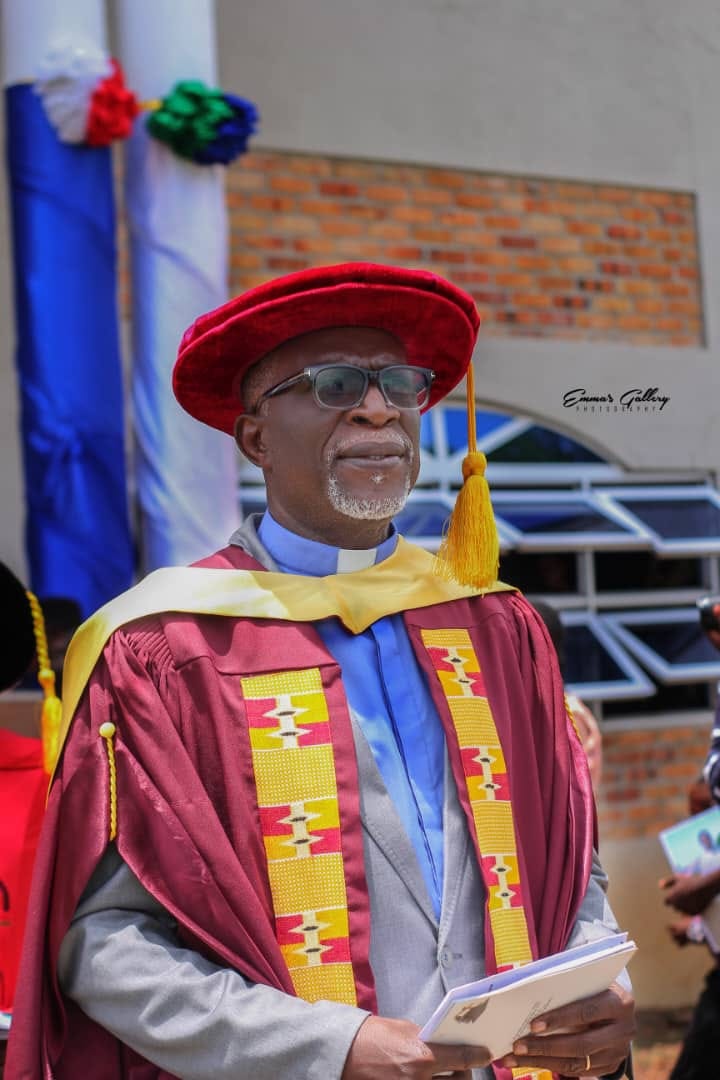
Bridging the Academy, the Church, and Creation
Rev. Prof. Ebenezer Yaw Blasu is a leading voice in African theocology and institutional formation. With decades of experience navigating the complex intersections of faith, environmental degradation, and higher education, he does not just write theology—he engineers systems for transformation.
He serves as a senior lecturer, researcher, and chaplain, holding deep expertise in the theology of creation care, particularly regarding the crisis of illegal mining (galamsey) and water governance in Ghana. His approach unites the doctrinal clarity of the academy with the urgent pastoral needs of the Global South.
- PhD in Theology & Religion (Focus on Theocology & Creation Care)
- Decades of experience in University Chaplaincy & Institutional Governance
- Published author on African theocology, water crises, and mining impacts
Frequently Asked Questions
Are your services only for institutions in Africa?
No. While my theology is deeply rooted in the African context, the frameworks for integrating creation care into institutional life are globally applicable. I work with North American and European institutions seeking authentic, Global South perspectives on theological ecology.
Do you work with specific denominations?
I work across the ecumenical spectrum. My approach focuses on orthodox Christian doctrines of creation that translate across Protestant, Catholic, and Evangelical traditions.
How is this different from typical environmental consulting?
Secular environmental consulting focuses purely on operations (e.g., carbon footprint). I focus on the soul of the institution—ensuring that your theology, worship, and student formation drive your ecological actions.
Let’s Build a System That Cares for Creation
Book a diagnostic call to explore how an African Theocology framework can transform your institution’s approach to ecological justice.